
 03 9467 9444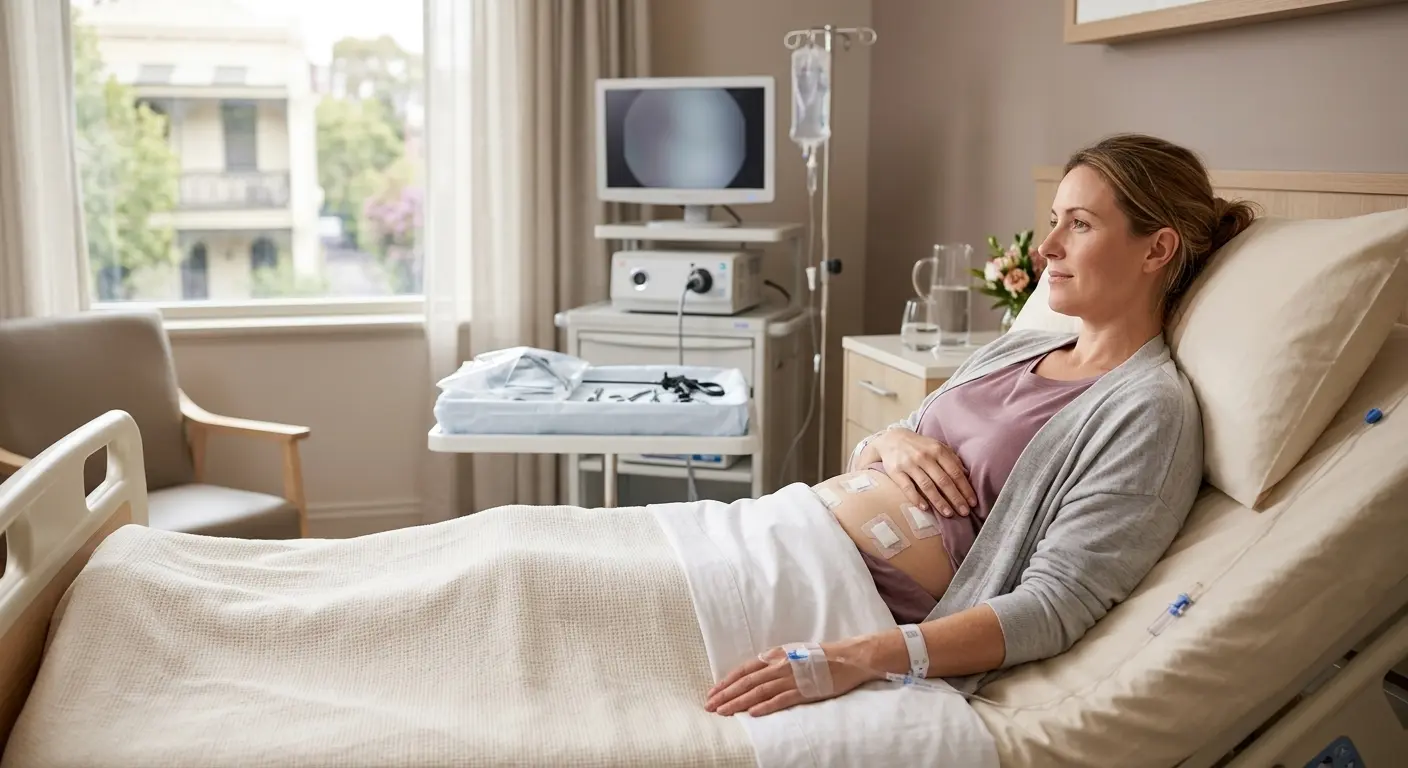
The word “surgery” is enough to make most people anxious, even when it describes one of the most common and least invasive options in gynaecology care. Laparoscopic surgery is a keyhole technique that has changed how many gynaecology conditions are found and treated. Understanding exactly what laparoscopy involves, from your first appointment through to recovery, takes a lot of the fear out of the process.
This guide is for women who have been told that laparoscopy may be needed, or who are considering it as a treatment and want to know what to expect. It is written with patients of Dr Steven Hatzikostas in mind – an experienced obstetrician and gynaecologist practising at Northpark Private Hospital in Melbourne.
What Is Laparoscopy?
Laparoscopy is a type of surgery in which a small camera, called a laparoscope, is inserted through a tiny cut, usually near the belly button. This lets the surgeon look at the inside of your pelvis and tummy. A few more small cuts let the surgeon pass in tools if any treatment is needed.
The surgery is done under general anaesthetic (fully asleep) and usually takes between 30 minutes and two hours, depending on why it’s needed. Because it doesn’t require a large incision, laparoscopy usually results in less pain, a shorter hospital stay, and a faster recovery than open surgery.
Gas, usually carbon dioxide, is gently used to puff up your tummy during the surgery. This makes room and helps the surgeon see clearly, allowing them to view the womb, tubes, ovaries, and nearby areas. Many of the conditions diagnosed or treated this way – such as endometriosis, ovarian cysts, and pelvic adhesions – can also influence fertility and future pregnancy planning.
Why Is Laparoscopy Recommended?
Laparoscopy is one of the most useful tools in gynaecology care. It’s used both to find out what’s wrong and to treat it, often at the same time.
Common reasons laparoscopy is recommended:
– Endometriosis. Laparoscopy is still the most reliable way to diagnose endometriosis, and it’s also used to remove or treat the patches causing pain. Untreated endometriosis can contribute to pelvic pain and fertility difficulties.
– Pelvic pain. When pain has no clear cause on a scan, laparoscopy gives a direct look inside that ultrasound simply can’t offer. Persistent pelvic pain is never something to just put up with.
– Ovarian cysts. Cysts that look concerning on ultrasound may be removed or sampled through laparoscopy.
– Ectopic pregnancy. A pregnancy growing in the tube can usually be treated through laparoscopy, often saving the tube where possible. This is an important consideration in complicated pregnancy care.
– Fibroids. Some fibroids, depending on size and place, can be managed this way. Fibroids are also a common cause of heavy menstrual bleeding and may be discussed alongside other options such as hysteroscopy and curettage.
– Fertility checks. Laparoscopy can check if the tubes are open and look for scar tissue or other causes of trouble conceiving. Addressing these issues early supports better reproductive outcomes.
– Scar tissue (adhesions). Scarring from past surgery or infection can be separated during laparoscopy.
– Hysterectomy. Some hysterectomies are done this way, offering a gentler option than open surgery. Your gynaecologist will explain whether a laparoscopic approach is suitable for your situation.
Your Laparoscopy Journey at a Glance
| Stage | What Happens | What You Should Do |
|---|---|---|
| Before surgery | Pre-admission check, blood tests, fasting rules | Arrange a lift home and a support person for 24 hours |
| During surgery | Small cuts, camera and gas used, 30 mins to 2 hours | Nothing — you’ll be fully asleep |
| First 48 hours | Shoulder tip pain, bloating, mild cramping | Rest, take prescribed pain relief |
| First 2 weeks | Gradual return to light activity | Avoid heavy lifting |
| 2 to 4 weeks | Return to full activity and exercise | Follow your surgeon’s specific advice |
What to Expect Before Your Procedure
Once laparoscopy is booked, your gynaecologist will walk you through what to do beforehand. At a practice such as Dr Hatzikostas’s, this conversation is personal and detailed so you know exactly what to expect.
Steps before surgery usually include:
– A pre-admission visit where your health history and anaesthetic options are discussed
– Blood tests and any other checks needed, based on your history
– Fasting rules: no food for at least six hours before the anaesthetic, and no clear fluids for at least two hours before
– Stopping some medicines in the days before surgery, especially blood thinners, if this applies to you
– Arranging for someone to drive you home and stay with you for the first 24 hours, since you can’t drive after a general anaesthetic
This is a good time to ask any questions about the surgery, the risks, and what recovery will look like. If you are planning a future pregnancy, it is also useful to discuss how the findings or treatment may affect fertility or pregnancy care.
What Happens During Laparoscopy
Once you are fully asleep, the surgical team gets your tummy ready. A small cut is made near the belly button, and a thin tube is put in. Your tummy is gently puffed up with gas. The camera then goes through the tube, and the surgeon views the inside on a screen.
One or more small cuts are made if tools need to go in to treat a problem, remove tissue, or take a sample.
Once the surgery is done, the gas is let out, the tools are removed, and the small cuts are closed, usually with a single stitch or paper strips. You’re then taken to a recovery area to be watched as the anaesthetic wears off. Procedures are performed at Northpark Private Hospital, where the surgical and recovery teams are experienced in laparoscopic gynaecology care.
Recovery After Laparoscopy
Recovery is usually much faster than after open surgery, but it still needs rest and realistic expectations.
What to expect in the hours and days after:
– Shoulder tip pain, caused by leftover gas irritating the area under your ribs, is common for the first 24 to 48 hours. It usually settles on its own.
– Bloating and mild cramping in your tummy are normal for the first few days.
– Most women feel able to do light activities within two to five days, and full activities, including exercise, within two to four weeks, depending on what was done.
– Take pain relief as prescribed by your surgeon.
– Avoid heavy lifting for at least two weeks after the procedure.
– Contact your surgeon if you get a fever, growing pain, redness or fluid from a cut, or anything that feels unexpected.
If more was done during your laparoscopy, such as removing significant endometriosis or an ovarian cyst, recovery may take longer, and your surgeon will give you specific advice. Clear post-operative guidance is part of the personal care approach at the practice.
Choosing the Right Gynaecology Surgeon
The skill and experience of your surgeon has a big effect on both how well the surgery works and how you recover. A specialist gynaecologist in Melbourne who does laparoscopy regularly, and who takes time to explain what your surgery involves, is the right person to trust with your care.
Dr Steven Hatzikostas is an experienced obstetrician and gynaecologist based at Northpark Private Hospital in Melbourne, with extensive expertise in laparoscopy and other gynaecological surgery. His practice covers a wide range of conditions, including endometriosis, ovarian problems, pelvic pain, and the gynaecological issues that can affect fertility and future pregnancies. He is committed to giving every patient a clear, personal explanation of their surgery and what recovery will look like.
As a gynaecology specialist in Melbourne, Dr Hatzikostas combines surgical skill with a thorough discussion before surgery, so every patient knows exactly what their laparoscopy involves before they arrive. He also provides comprehensive obstetric and pregnancy care, which means continuity of care if gynaecological findings later relate to pregnancy planning or high-risk pregnancy management.
After Your Procedure: Follow-Up Care
Your gynaecologist will book a follow-up visit after laparoscopy to go through the findings, discuss any biopsy results, and plan any further care. If endometriosis was found and treated, ongoing management will be discussed. If a diagnosis was reached, the next steps in your care will be clearly explained. Where fertility or future pregnancy is a concern, the discussion can also cover how the findings fit into broader reproductive planning.
Conclusion
Laparoscopy is a safe, useful, and effective procedure in the hands of an experienced gynaecology surgeon. For many women, it gives both a diagnosis and a treatment in a single visit, with a recovery time that lets you get back to normal life within days to weeks.
Dr Steven Hatzikostas performs laparoscopic surgery in Melbourne with a focus on personal patient care, clear communication, and thorough follow-up. If laparoscopy has been suggested for you, or you’re looking for a specialist gynaecologist in Melbourne to check a gynaecology concern, booking a consultation is the right first step toward answers and effective treatment.
Frequently Asked Questions
How long does a laparoscopy take?
This depends on why it’s being done. A simple check-up procedure may take 30 to 45 minutes. More involved surgery, such as treating endometriosis or removing cysts, may take one to two hours or more.
Will I need to stay overnight in hospital?
Many laparoscopy procedures are done as day surgery, meaning you go home the same day. More involved surgery may need an overnight stay. Your gynaecologist will let you know in advance based on your specific surgery. Care is provided at Northpark Private Hospital.
Can laparoscopy affect my fertility?
In many cases, laparoscopy can actually help fertility by treating conditions like endometriosis or removing scar tissue. There is a small chance of injury to the tubes or ovaries with any pelvic surgery, but experienced surgeons take great care to avoid this. Talk to your gynaecologist about your fertility concerns before the surgery. Addressing underlying issues early can also support healthier pregnancies later on.
Are there alternatives to laparoscopy?
For diagnosis, pelvic ultrasound and MRI provide useful information, but they can’t always confirm conditions like endometriosis with certainty. For treating many gynaecology conditions, laparoscopy is a gentler option than open surgery. Related procedures such as hysteroscopy and curettage may be more suitable for certain intrauterine problems. Your gynaecologist will discuss whether other options suit your situation.
When can I return to work after laparoscopy?
For desk-based work, many women feel ready within three to five days. For physical work, two to four weeks off is more typical. Your gynaecologist will give specific advice based on what was done during your surgery.